
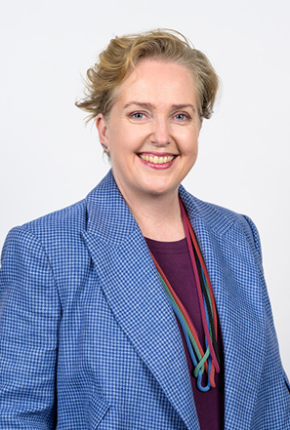
ACMA Authority Member Samantha Yorke joined Joel Rheinberger on ABC Radio Tasmania on 25 February 2026 to discuss the fictitious phone numbers the ACMA has set aside for use in creative works such as TV shows and films. She explained how these numbers help prevent real people from receiving unintended calls, referencing the well‑known Squid Game incident, where a real phone number mistakenly featured in the show led to thousands of unwanted calls.
Interview audio
Interview transcript
Joel:
If you watch American TV or movies, you'll notice that any time they use a phone number on the screen, it starts with 555, and that's because certain 555 numbers were put aside specifically for fictional use. What do we do with fictional phone numbers in Australia, so we don't end up with some poor random grandma receiving calls from fans of an Australian horror movie? Samantha Yorke is Consumer Lead with ACMA, the Australian Communications and Media Authority. They're also kind of the boss of us, so I'll have to be nice to her.
Hello, Samantha. How are you doing?
Samantha:
Hi, Joel. I'm really well, thanks. How are you?
Joel:
I'm good. When someone does put a fictional number on the screen, how often do people actually try to call it?
Samantha:
Well, it must happen a surprising number of times, Joel, because the US, as you mentioned, have set aside numbers in the 555 range for TV and movies since the 1960s. So, they must have realised pretty early on that this was going to be a problem.
We've got a more recent example to give you, too, from the South Korean TV show Squid Game. Do you remember that one?
Joel:
Yes, it's huge.
Samantha:
Yes. So, they included a phone number on their show, and it was a real number, and that poor person who felt that number was receiving about 4,000 calls a day. So, the producers actually had to go back and edit the episode and change the number to stop this poor person from receiving so many calls.
Joel:
Now, I heard of a film some years ago in the States that did the same thing and ended up having to pay for the person to have a new number and pay them a little bit of money to make them stop whinging about it, as you would if you were getting 4,000 calls a day.
So now, how does this work? If I've got a project, do you have a specific number for each project, or is there just a pool of numbers that fiction makers can use?
Samantha:
Yes. So, we make available on the ACMA website a pool of numbers, Joel. So, anybody who's producing a TV or a film show can just go to the website, have a look at those numbers, pick which one works best for them, and use it.
They don't need any additional permissions. It doesn't cost any money. So, we try to make it as easy as possible for people.
Joel:
And no cost attached to that?
Samantha:
No, no, free to use.
Joel:
That makes it nice and easy, doesn't it? What sorts of numbers do people ask for? Like, you know, is it just generally mobiles, or are they often looking for like a 1300 number, something like we use?
Samantha:
Well, the range of numbers that we make available here in Australia comprise mobile numbers, 1800 numbers, and local numbers, so sort of landline numbers with an area code. So they're the three types of numbers that we make available for this purpose here.
Joel:
Are there other sorts of numbers out there in Australia? Like there's the 13, there's the 1300, there's landlines, what else is there?
Samantha:
Yeah, there's five different types of phone numbers that we use in Australia at the moment. It's a fluid space and it can change, but you've got the geographic numbers that are mainly local or landline services. They're usually 10 digits long, they start with a two-digit area code. So of course, 03 down there in Tassie. There's also mobile numbers – they generally have 10 digits, they start with 04. There's local rate numbers, which we're seeing more and more with shorter numbers, normally about six digits – they start with 13 or 10 digits starting with 1300.
These are generally business numbers and they are often used by companies that operate in more than one location, but want to have one single number that customers can call. Then there's free phone numbers that start with 1800 and they're often used by government services and charities. And then lastly, there's what we call smart numbers, which start with 1300 or 1800 and they're often branded or they have very catchy numbers to make them easy to remember. So a branded one might be, you know, 1-800-ABC, for instance.
Joel:
Well, in fact, we have 1-300-222-936, which is 1-300-ABC-936 is a way you could potentially dial that.
Samantha:
Exactly.
Joel:
How does a business go about getting the exact number they want?
Samantha:
So the way that the numbering system works is that the ACMA manages the system, the infrastructure behind it, and then we then give blocks of numbers to telecommunications providers who then sell them to their customers.
So if you're a business, you want to buy a smart number, for instance, that has your brand name in it, you would contact the company that you use to provide your telco services and ask them if it's available and if it is, how much it would then cost for you to use that number.
Joel:
Is there someone at ACMA keeping an eye on the market and going, you know, 20 years ago, we should save 1-300-Google, we should save 1-300-Facebook?
Samantha:
We don't get into that level of specificity, but we do just keep an eye on the use of the different types of numbers, Joel. So we realised, for instance, a little while ago that there was a set of numbers that were set aside starting with 1-900, they were premium service numbers, but they just weren't being used very often.
So, we actually changed how they were managed and they're now being used by telcos for other services.
Joel:
You're listening to Afternoons with Joel Rheinberger on ABC Radio Hobart and ABC Northern Tasmania. With us is Samantha Yorke from ACMA, who's a consumer lead there, talking about phone numbers and how they work.
I believe you've been looking at the landline usage. Is that shrinking dramatically? Is there going to be a time in the future when we've stopped using them?
Samantha:
So the use of landlines is indeed shrinking, Joel. We do annual consumer surveys across the country and starting back in 2017, 54% of the people we surveyed were using a landline.
That number in the 2025 survey results has decreased down to 12%. There was a big drop from 2020 to 2021 during the COVID pandemic. I wonder if those two facts are related, but generally there's a drop of about 3-4% each year in the number of people using landlines.
So, I guess I'd predict that in maybe four to six years, we may see the use of landlines has just disappeared.
Joel:
Wow, everyone has a mobile number. Are we going to run out of mobile numbers?
Samantha:
Well, I've got good news for you there, Joel.
Currently, of course, we all use mobile numbers that start with a 04. There's 100 million of those numbers available. We're actually already using 86 out of that 100 million, 86 million, I should say, which is a surprising number, given that we're a population of 26 million in Australia.
But I mean, it's interesting to know that numbers are also quite unique. Numbers are assigned to things like smart watches and other smart devices, cars, and even vending machines. So, we do see a time in the next 10 years or so that we will run out of 04 mobile numbers.
But don't worry, we've set aside the whole range of 05 numbers, which we will then move on to allocate mobile numbers once we run out of the 04 ones.
Joel:
Samantha Yorke, great to talk to you. Thank you.
Samantha:
Thank you, Joel.
Joel:
Consumer Lead with ACMA, Samantha Yorke on ABC Radio Hobart and ABC Northern Tasmania.